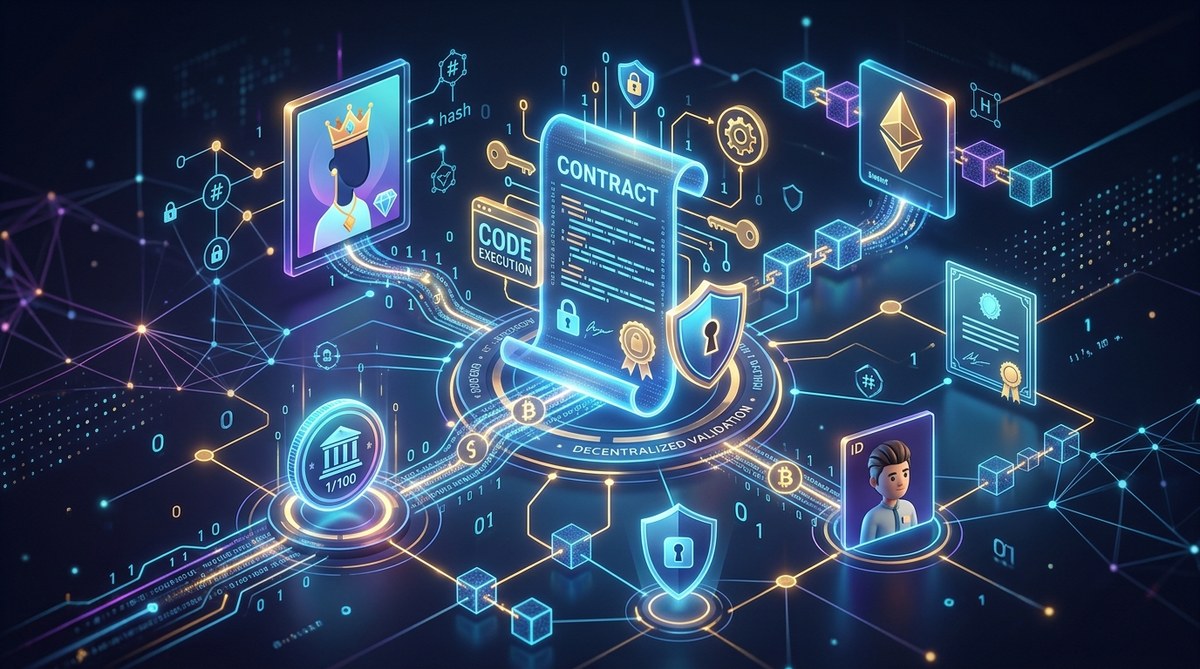
Digital ownership is evolving from a concept into a practical capability that touches art, games, real estate, and everyday digital experiences. At BuiltWithNFT.org we believe the engine behind this transformation is smart contracts. These self executing programs run on blockchain networks, automatically enforcing the rules of ownership, transfer, and provenance without intermediaries. In this article we unpack how smart contracts power digital ownership, the role of NFT standards, and what the future holds for creators, collectors, and developers navigating the NFT landscape.
What are smart contracts and why they matter for digital ownership
Smart contracts are code scripts that live on a blockchain and execute when predefined conditions are met. They are not controlled by any single party, yet they reliably enforce the terms of a transaction. The immutability of the blockchain combined with the deterministic nature of contract logic creates a trusted layer for digital ownership.
- Key concepts to understand:
- Self executing code: Once deployed, a smart contract runs exactly as written, no human intervention required.
- Trustless automation: Parties can transact with confidence knowing the contract will execute without bias.
- On chain state and provenance: Ownership records, transfer events, and royalties are recorded in a tamper resistant ledger.
-
Decentralized enforcement: No central authority is needed to verify or police ownership.
-
Why this matters for digital ownership:
- Provenance becomes verifiable: Each token has a verifiable history of creation, sale, and transfer.
- Transfer becomes frictionless: A single transaction can transfer ownership across borders and platforms.
- Programmable rights: Ownership is not only about possession; it can encode rights, royalties, and access.
Smart contracts provide the foundational layer for non fungible tokens or NFTs. NFTs are unique tokens that represent ownership of a specific asset, whether digital art, a collectible, a game item, or a ticket. The contract governs who owns the token, how it can be transferred, and what rights or metadata travel with it.
How smart contracts power NFT ownership
NFT ownership is secured by the relationship between the token contract and the underlying blockchain state. When an NFT is minted, a contract creates a token id and assigns it to an owner. Each transfer updates the contract state and the blockchain ledger, making ownership history transparent and auditable.
- The core mechanics:
- Token creation (minting): The contract defines what a token is and what metadata it carries.
- Ownership mapping: The contract stores the owner address for each token id.
- Transfer logic: Transfers update the owner and emit events that external applications can listen to.
-
Metadata linkage: Tokens point to metadata that describes the asset, often stored off chain for flexibility.
-
Why this system is powerful:
- Immutable ownership records: The blockchain provides an unalterable ledger of who owns what and when.
- Royalty enforcement: Smart contracts can automatically pay royalties to creators on secondary sales.
-
Permissionless interoperability: Standardized contracts enable tokens to move across marketplaces and apps without a single gatekeeper.
-
Common standards you will encounter:
- ERC 721: The original standard for non fungible tokens. Each token is unique and non interchangeable.
- ERC 1155: A multi token standard that supports both fungible and non fungible tokens within the same contract.
- ERC 721A (and similar optimizations): Variations aimed at reducing minting costs and improving efficiency.
Understanding these standards helps explain how digital ownership scales. For example, ERC 721 defines the basic interface for ownership and transfer, while ERC 1155 can manage a collection of different token types more efficiently in some use cases.
Distinguishing token standards and what they mean for ownership
Token standards are the blueprints for how tokens behave on a blockchain. They determine not only how ownership is tracked but also how tokens are transferred, what data is stored, and how wallets and marketplaces interact with them.
- ERC 721: Each token has a unique identifier. Ownership is a one to one relationship with a specific asset. This is ideal for digital art, one of a kind collectibles, and rare items in games.
- ERC 1155: A flexible standard that supports both non fungible and fungible tokens within one contract. This is efficient for games with many similar items or bundles where you might own multiple versions of a weapon or resource.
- IPFS and metadata: A growing practice is to store metadata off chain on IPFS or similar systems, while the token on chain holds a reference to the metadata. This keeps on chain storage light while preserving decentralization.
Token standards also influence:
– Royalty enforcement: Contracts can embed royalty rules that trigger on sales.
– Access control: Some NFTs grant access to communities, events, or content.
– Interoperability: Standardized interfaces mean wallets and marketplaces can interact with tokens consistently.
Ownership rights, royalties, and the evolution of on chain permissioning
Smart contracts can encode not just who owns a token, but what ownership entails. This includes transferability, display rights, and revenue sharing.
- Creator royalties:
- On chain royalties can be baked into the contract so that a percentage of every secondary sale returns to the creator automatically.
-
This aligns incentives for creators in a market that traditionally rewarded only upfront sales.
-
On chain vs off chain metadata:
- On chain metadata ensures that token data is preserved directly on the blockchain, but it can be costly.
-
Off chain metadata (for example stored on IPFS) is common for larger data such as high resolution artwork. The token then points to this data and anchors its identity in the contract.
-
Provenance and attribution:
- Each transfer emits events that corner stake holders can verify. This makes provenance a first class citizen of the ownership experience.
-
Verification across marketplaces becomes easier when all transactions reference the same standards.
-
Lazy minting:
- A pattern where the NFT is minted at the moment of first purchase, reducing upfront costs for creators and allowing easier entry for new artists.
By embedding royalties and provenance directly into smart contracts, digital ownership becomes self sustaining and creator friendly. This is a core reason many NFTs have reshaped how content creators monetize their work.
Smart contracts and NFT standards in practice
To see how this works in the real world, consider three practical areas: token standards, metadata and provenance, and the costs associated with on chain activity.
Token standards overview
- ERC 721 for unique items
- Pros: Simple, clear ownership semantics, widespread support
- Cons: Fewer opportunities to batch operations
- ERC 1155 for multi token types
- Pros: Efficient batch transfers, reduces gas for collections
- Cons: More complex to implement
- Optimized variants (ERC 721A, etc.)
- Pros: Reduced minting costs, better for large drops
- Cons: Adoption varies by marketplace
Metadata and provenance
- On chain metadata
- Pros: Immutable, censorship resistant
- Cons: Higher storage costs
- Off chain metadata with on chain pointers
- Pros: Flexible, scalable for large data
- Cons: Reliant on external storage and retrieval systems
- Provenance tracking
- The contract keeps a history of ownership
- Marketplaces can surface the chain of custody for each token
Gas costs and transaction efficiency
- Gas fees vary by network congestion and contract design
- Batch operations and efficient contracts reduce costs
- Layer 2 solutions can dramatically cut fees while preserving trust
Understanding these practical facets helps creators and developers plan launches, audits, and long term maintenance for NFT projects.
Use cases: how digital ownership plays out across the ecosystem
Digital ownership powered by smart contracts touches many sectors. Here are some high impact areas where this technology is proving transformative.
Digital art and collectibles
- Artists can mint limited editions with explicit scarcity
- Secondary sales pay royalties forever
- Transparent provenance supports collectors and galleries
Gaming and virtual goods
- In game economies, items are truly owned by players rather than controlled by a central server
- Skins, weapons, and resources can be traded across games and platforms if standards align
- Interoperability enables cross game experiences and monetization
Metaverse and virtual real estate
- Virtual land parcels and buildings represent ownership of digital space
- Smart contracts govern sale, rent, and access rights
- Marketplaces and metaverse platforms rely on NFT standards for seamless experiences
Tokenized real world assets
- Real estate, fine art, music rights, and luxury goods can be tokenized
- Fractional ownership allows broader participation
- Transparent governance and performance reporting can be built into the contract
Security, reliability, and risks in smart contract powered ownership
Digital ownership is powerful but not without risk. Sound practices and vigilant auditing are essential.
Smart contract audits
- Comprehensive reviews of logic, edge cases, and security vulnerabilities
- Third party audits help build trust with buyers and partners
- Regular upgrades and maintainability planning are important
Common vulnerabilities to watch for
- Reentrancy
- Overflow and underflow
- Improper access controls
- Inadequate input validation
Best practices for creators and platforms
- Use proven templates and widely adopted standards
- Integrate robust testing and testnet deployment
- Plan for upgrades with proxy patterns or modular designs
- Establish clear metadata governance and data sources
Security is not a one time check. It is an ongoing discipline that underpins durable digital ownership.
The road ahead: future trends in smart contracts and digital ownership
The NFT and smart contract landscape is dynamic. Here are trends shaping the next era of digital ownership.
Multi chain and cross chain compatibility
- More tokens will live on multiple chains for resilience and access
- Cross chain bridges and standard mappings will enable smoother transfers
Layer 2 and scalability
- Layer 2 networks bring faster transactions and lower costs
- This is especially impactful for large NFT drops and high velocity marketplaces
Evolving standards and interoperability
- New token standards may unlock novel rights and use cases
- Better interoperability between wallets, marketplaces, and DAOs will simplify user experiences
Legal and regulatory considerations
- Legal frameworks around digital ownership, royalties, and tokenized assets are evolving
- Clear guidelines help protect creators, investors, and platforms
Getting started: engaging with smart contracts for NFT ownership
Whether you are a creator, a collector, or a developer, the roadmap to meaningful digital ownership starts with education and action.
For creators
- Learn the major NFT standards (ERC 721, ERC 1155) and why they matter
- Choose a model for metadata (on chain vs off chain)
- Plan royalties and provenance rules in the contract
- Start with a small drop on a public testnet
- Audit early and partner with reputable marketplaces
For collectors
- Look for transparent provenance and royalty structures
- Prefer tokens that follow widely adopted standards for broad support
- Understand the storage model for metadata and the risks of off chain data
For developers
- Start with a secure design pattern and robust testing
- Consider upgradeability and future maintenance
- Build with multi chain and layer 2 considerations in mind
- Engage communities and gather feedback from creators and collectors
Conclusion: embracing digital ownership with smart contracts
Smart contracts unlock a new era where digital ownership is verifiable, transferable, and economically meaningful. They enable NFTs to represent unique assets with transparent provenance, enforce creator royalties, and operate across a growing network of platforms. As the NFT ecosystem matures, the combination of standardized token behavior, thoughtful metadata strategies, and rigorous security practices will continue to lower the barriers to entry for artists, gamers, brands, and everyday users seeking true digital ownership.
BuiltWithNFT.org invites you to explore this evolution. From origins and token standards to smart contract mechanisms and the metaverse, we are your gateway to the NFT revolution. Stay curious, experiment thoughtfully, and participate in a vibrant ecosystem where ownership can finally be truly owned.
No Responses